Online nutrition coaching can be worth the investment if you already know the basics but keep getting stuck on how to apply them. If you train consistently, try to eat well, and still feel like you’re guessing at what to change, a good coach can help you figure out what’s getting in the way and build a plan you can actually follow.
“I already know what to eat” is something we hear all the time on consults at BIA Nutrition. Most of the time, she does. She knows what a balanced meal looks like and how to get a workout in. What she’s trying to figure out is how much to eat for her goals, how to fuel a long day, and what to change when she’s been doing what she thought was right and still feels stuck.
That’s where the investment starts to make sense. You have someone looking at your progress with you week to week, helping you see patterns that are hard to spot when you’re living through them.
What Are You Actually Paying an Online Nutrition Coach For?
A meal plan can tell you what to eat on Tuesday. The real test is what happens when Tuesday gets away from you. You trained before work, your afternoon meetings ran long, and now you’re deciding what’s for dinner when you’re already hungry. Can you make a decision that works for you without feeling like the whole day went sideways?
At BIA, your one-on-one coach reviews your weekly check-in and looks at your nutrition and training alongside things like hunger, energy, sleep, recovery, and stress. That context helps us decide what to adjust. If you’re dragging by late afternoon most days, we might start by looking at when you’re eating and what you’re getting in before that point. Sometimes the change is as practical as prepping a few ingredients you can turn into lunch all week.
There are also live weekly calls where you can ask questions and a community where you can learn how other women handle some of the same situations. When you’re comparing programs, ask who reviews your check-ins, how often you’ll hear from them, and where you can go with a question that comes up midweek. You want to know what working together looks like after you get the initial plan.
What This Looked Like for Tiger
Tiger is a professional dancer and choreographer who spends a lot of her time teaching dance. In her testimonial, she said she already “had the tools.” Her work revolved around movement, and she still felt scattered trying to figure out how to eat and train for herself.
When she started tracking her intake, we could see that the balance of what she was eating was out of step with what she needed to support her schedule and goals. Grabbing a salad between classes felt like a healthy choice. The more useful question was whether that lunch gave her what she needed to get through the rest of a busy teaching day. We worked on prepping ingredients ahead of time so she could put together meals that would carry her through the day.
Travel was another place we could make things easier. She and her coach talked through what she could pack, what to look for at the airport, and what would get her from one end of the travel day to the other. By the time she got to the airport, she had one fewer decision to make in the middle of the chaos.
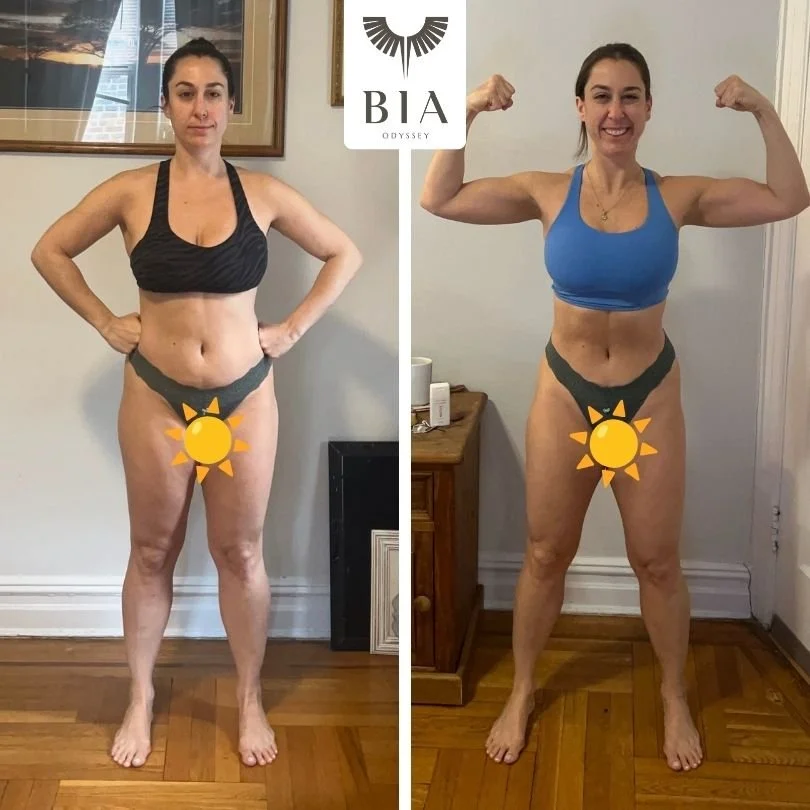
Tiger lost 11 pounds while working with us and got the body composition changes she was after. In her testimonial, she spent more time talking about how strong she felt and how her clothes fit. The size-four pants she was wearing were already loose.
Does an In-Person Trainer Get You Better Results?
Think about how many women you know who’ve been going to the gym for five years and still want to see a change in their body composition. They may be stronger and more comfortable in the gym than when they started. If the goal is fat loss and they’re already lifting consistently, the first place we often look is what they’re eating across the week.
A review of long-term studies in adults with overweight or obesity found that combining dietary changes with exercise led to greater fat loss than exercise alone. Strength training also helps preserve lean mass during fat loss. If your goal is to lose fat and keep the muscle you’ve worked for, your training and nutrition need to support each other.
An in-person trainer can watch a lift and give you a cue while you’re doing it. At BIA, clients submit videos of their lifts so their coach can review their form and tell them what to try in their next session. I explain what we look for in those videos in our guide to how online personal training works. If the biggest questions come up outside the gym, like what to eat on a long shift or how to handle a week of travel, that’s where having someone look at your whole week can be especially valuable.
How Much Does Personal Training Cost?
Bark’s 2026 U.S. pricing guide estimates 50–90 per personal training session. Over four weeks, that’s 400–720 at two sessions per week or 600–1,080 at three sessions per week. Rates vary by location, session length, and the package you choose.
Before you spend the money, think about where you’re getting stuck. If you want someone beside you while you learn to lift, that’s a good reason to book in-person sessions. If you already get your workouts in and spend the rest of the week guessing at how to eat for your goals, you’ll likely get more value from a coach who can help you work through those decisions.
What Can You Expect in the First Month or Two?
At BIA, we start with our Reset phase. We use that time to understand what you’re currently eating, how you’re feeling, and what you can realistically repeat. Depending on where you start, we may spend time figuring out what maintenance looks like for you before moving into a dedicated fat-loss phase.
Some clients see early changes in weight or how their clothes fit. We also look for early signs that the plan is fitting into your week.
You’re eating enough earlier in the day to get through the afternoon with steadier energy.
You’re tracking your food and getting your training in more consistently.
You know what to pack for a long day and what you could buy if plans change.
You feel more confident making food decisions when your routine gets interrupted.
Those changes give us something to build on. At BIA, we often plan for 12 to 18 months across all four phases, including time to practice maintaining your results. Your starting point and goals shape that timeline. I break down each phase in our guide to how long it takes to lose weight and keep it off. In the first few weeks, we want to see how the habits you’re working on hold up on a regular Tuesday, on a travel day, and during a week when work is extra demanding.
When Would We Tell You to Hold Off?
If you have major surgery coming up or you’re preparing for an egg retrieval, we’d tell you to hold off on starting BIA’s body composition coaching while that care takes priority. And if your main goal is to fuel for a marathon, your investment might make more sense with someone who specializes in endurance nutrition.
A busy season is a different conversation. We hear from a lot of women who want to start after work settles down, after the trip, or once the kids’ schedules ease up. If your life is usually some version of busy, that’s the life your plan has to fit. Working through one of those weeks with a coach gives you a chance to figure out what’s manageable while you have support. If getting to a gym is the part that keeps falling through, see how Cassandra made progress without gym access by starting with nutrition and daily steps.
How to Decide if Online Nutrition Coaching Is Worth It for You
Think about the last few weeks. Where did you keep getting stuck? Maybe you show up for your workouts but forget to eat until you’re starving. Maybe you do fine at home but feel like you’re starting over after every work trip. Maybe you grew up with rules about what you were allowed to eat, and those rules are still making everyday choices harder than they need to be.
That’s what we’d talk through on a consult. A good investment helps you make those decisions with more confidence now and gives you skills you can use on your own later. If that’s the kind of support you’re looking for, you can learn more about BIA Nutrition’s one-on-one fitness and nutrition coaching.