You can see meaningful changes in three to six months. But losing weight, learning to maintain it, and feeling confident without tracking every bite can take longer. Inside BIA Nutrition, we often plan for roughly 12 to 18 months across four phases: Reset, Sculpt, Recharge, and Autonomy.
That is our coaching timeline, rather than a deadline everyone needs to follow. Your goals, starting point, consistency, and response determine the pace. You are not dieting for that entire time.
If your plan has been, “I'll grind it out for three months, lose the weight, and then I'll know what to do forever,” I understand. Six-week shreds and 12-week challenges have sold you that expectation for years.
But what happens after the before-and-after photo, when work gets busy or you stop logging your food?
Your plan needs an answer.
Why Do I Keep Regaining Weight After a Diet?
A pattern I see often is a woman following a plan she can tolerate temporarily, getting results, and then returning to her previous routine.
She cuts out restaurant meals, adds workouts she barely has time for, and pushes through because there is an end date. Meanwhile, she gets very little practice maintaining her progress in everyday life.
Biology can make that transition harder, too. In a study following people after a very-low-energy diet, increased hunger and several changes in appetite-regulating hormones persisted a year after the initial weight loss. Read the study.
That does not predict everyone's experience. It does help explain why maintaining weight loss deserves attention and support.
My strongest opinion is this: a plan should address the habits and behaviors you need after the weight comes off. Reaching your goal should come with a clear understanding of what happens next.
What Does a Realistic Weight-Loss Timeline Looks Like?
Our Odyssey Mastery Method gives each part of the process its own purpose:
Reset: Usually three to seven months to establish consistent nutrition, movement, training, and recovery.
Sculpt: Typically 12 to 16 weeks of intentional fat loss.
Recharge: Generally two to three months to transition out of the deficit and practice maintenance.
Autonomy: Often another three to four months to build confidence with less reliance on tracking and weighing.
These ranges guide planning. Weekly check-ins and your actual response guide decisions. Some women need longer, and larger goals may require additional phases.
Maintenance and independence deserve time on the calendar, too.
Phase One: Reset Builds Your Foundation
Women arrive at BIA from very different places.
One has spent years eating less and adding cardio. Another barely thought about nutrition in her twenties because she was constantly moving. Now she has a desk job, a family, and a completely different routine.
Their starting plans should reflect those differences.
During Reset, we simplify: consistent meals, appropriate nutrition targets, strength training, steps, sleep, and manageable stress. We also teach practical skills, including building meals, understanding portions, and following a routine during a busy week.
What Happens to Your Weight During Reset?
We generally see three patterns:
Weight decreases as nutrition and movement become more consistent, or someone reduces an intake that exceeded her needs. Fat loss still requires an energy deficit, even before a formal Sculpt phase.
Weight stays relatively stable while eating habits, training, and confidence improve.
Weight increases. We assess the trend alongside intake, activity, photos, and how the client feels. Changes may include water, more food in the digestive system, or fat gain if intake exceeds her needs.
“Reset” is our name for this preparation phase. We are finding an appropriate intake and establishing habits we can build on.
Karen's Story: Eating More While Making Progress
Karen is a mom of two who runs her own business. When she joined us, she reported eating about 900 calories a day and expected us to cut her food further.
We started her around 1,200 calories and gradually increased to about 1,800 while working on strength training, steps, and consistency.
Over approximately four and a half months, she lost eight pounds before beginning her intentional Sculpt phase. Her clothes started fitting differently, too.
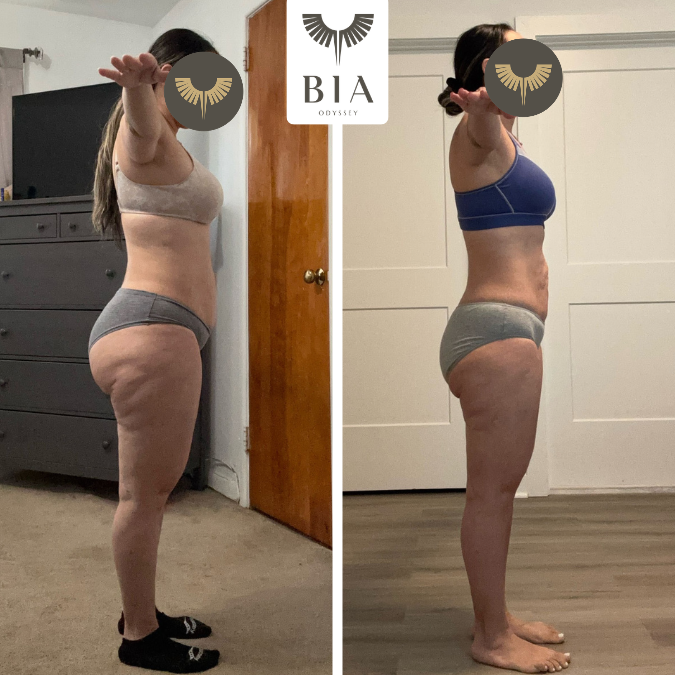
Several things changed together, so we cannot attribute her result to increasing calories alone. Her experience shows why I want to understand someone's full routine before automatically prescribing less food.
Karen is now maintaining her weight using the tools she learned through our process. These client stories describe individual outcomes; another person's results may differ.
Phase Two: Sculpt Starts When You Are Ready
Sculpt is where we intentionally reduce calories to pursue fat loss while continuing strength training.
Before starting, my team looks for:
Consistent adherence to the agreed nutrition targets and tracking.
Regular attendance at planned workouts.
Generally good sleep and manageable stress.
An established intake that allows room for an appropriate deficit.
I sometimes say you “earn the Sculpt.” That means showing that the routine is workable before making it more demanding. Needing more preparation is simply useful information.
If you are struggling to follow your current food targets, lowering them may make the same problem harder. We need to understand what is getting in the way.
Why NaTania Needed More Time
NaTania spent years struggling with her weight. She needed roughly eight months to establish consistency during Reset before moving into Sculpt.
Over her transformation, she lost 75 pounds. She is now maintaining using the tools and techniques learned in Autonomy.
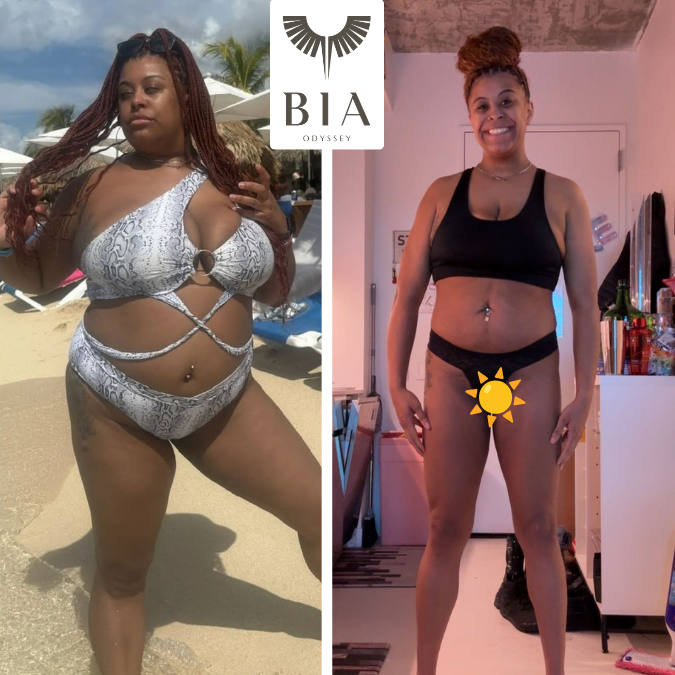
Those preparation months mattered. They gave us time to work on behaviors she would need during fat loss and afterward.
Although Sculpt typically lasts 12 to 16 weeks, we review progress, recovery, adherence, and the client's wishes throughout. The client and coach decide together when it makes sense to transition.
Phase Three: Recharge Prepares You for Maintenance
Imagine reaching your goal and being afraid to eat more because you do not know what will happen.
I see that fear often. A woman associates maintaining her results with staying on dieting calories indefinitely.
During Recharge, we adjust food intake toward her current maintenance needs. Check-ins help us assess weight trends, training, hunger, energy, and how manageable the plan feels.
Does Reverse Dieting Prevent Weight Regain?
Reverse dieting means gradually increasing calories after a diet. It can provide structure, but research has not established it as a superior way to prevent regain.
A preliminary randomized study involving 49 resistance-trained adults found no statistically significant difference in weight regain between gradual increases, an immediate return to estimated maintenance, and eating without prescribed calorie targets over 15 weeks. Read the study.
For our clients, Recharge provides a plan, support, and practice eating more. The size and timing of increases depend on the person.
What If the Scale Goes Up?
One client worried when her weight increased about two pounds during Recharge. Meanwhile, she was lifting heavier, her photos showed progress, and she was eating hundreds more calories.
Increasing carbohydrates can replenish glycogen, which is stored with water. Scale weight can therefore rise without an equivalent increase in body fat. See the research behind the NIDDK Body Weight Planner.
We look at trends alongside the rest of the client's feedback. One weigh-in cannot tell the whole story.
Phase Four: Autonomy Helps You Move Away From Tracking
I do not want you weighing your chicken forever because you are terrified of what happens if you stop.
Tracking can teach you about portions and your own intake. Autonomy gives you practice using that knowledge with less dependence on the tools.
That may include:
Eating familiar meals without logging every ingredient.
Navigating restaurants without exact numbers.
Recognizing hunger, fullness, and satisfaction.
Tracking selected days when a brief check would help.
Recognizing changes in habits and knowing how to respond.
One client used to describe feeling completely out of control around cake. By graduation, she could enjoy a slice and move on with her day. That kind of freedom matters long after a fat-loss phase ends.
What Coming Back to Baseline Looks Like
After vacation or a difficult week, coming back to baseline means returning to your maintenance habits.
Shop for your usual meals. Resume your regular training and movement. Prioritize sleep. If portions feel uncertain, use a short period of tracking to check your estimates.
You need a familiar routine you can return to without turning one week away into six weeks of feeling defeated.
That is something we practice while coaching support is still there.
Your Goal Body May Look Different From Your Goal Weight
I started around 180 pounds without much attention to nutrition or movement. Later, I became convinced that 140 pounds would be my magic number.
I reached it and still looked softer than I expected. I had imagined more muscle and a different shape.
Working through phases with a coach helped me understand what building that physique actually required. Today, I am in a growth season for my next bodybuilding show, working toward becoming an IFBB bikini pro.
After six years of coaching, I see women discover that their goals involve strength, confidence, and comfort around food as much as a scale number.
Your goals can evolve. Your plan should have room for that.
Build a Plan for Life After the Diet
Before choosing another deadline, ask yourself:
Can I repeat my meals and workouts during a busy week?
Do I know how to transition out of a deficit?
Have I practiced maintaining while eating more flexibly?
Can I recover from a difficult week without starting a new diet?
Those answers reveal what you need next.