Yes. An online coach can help you lose weight without gym access by helping you establish nutrition habits, consistent movement, and a plan you can follow within your actual life.
I know that because we’ve helped women do it at BIA Nutrition.
Our client Cassandra started with us in May. By November, she had lost over 30 pounds through nutrition and daily steps, without lifting a single weight.
That doesn’t mean strength training has no place in her future. It means she didn’t need to wait for a gym membership to start making progress.
If you’ve been thinking, “I’ll get serious when I can get to the gym,” there are things you can start working on right now.
Why Going to the Gym Doesn’t Automatically Lead to Weight Loss
One of the biggest misconceptions I hear is that exercise is the main thing determining whether someone loses weight.
You can work incredibly hard in the gym and still feel like your body never changes. We’ve all seen it: someone has been training for years, putting in the effort, yet the results don’t reflect what they expected.
Often, nutrition is the piece that hasn’t received the same attention.
Weight loss requires a sustained calorie deficit, meaning you consume less energy than your body uses over time. Exercise contributes to energy expenditure, but food intake matters too. The CDC notes that most weight loss comes from reducing calorie intake.
Someone who changes her nutrition and walks consistently can lose more weight than someone who goes to the gym but never creates that deficit.
That isn’t a guarantee about either person. It explains why more workouts don’t automatically solve the problem.
You also don’t have to track every macro to lose weight. Tracking is one tool we use to build awareness and guide decisions.
Cassandra’s Experience: Over 30 Pounds Lost Without Lifting Weights
Cassandra’s initial approach with us was straightforward: focus on nutrition and get her daily steps in consistently.
From May to November, she lost over 30 pounds without lifting weights.
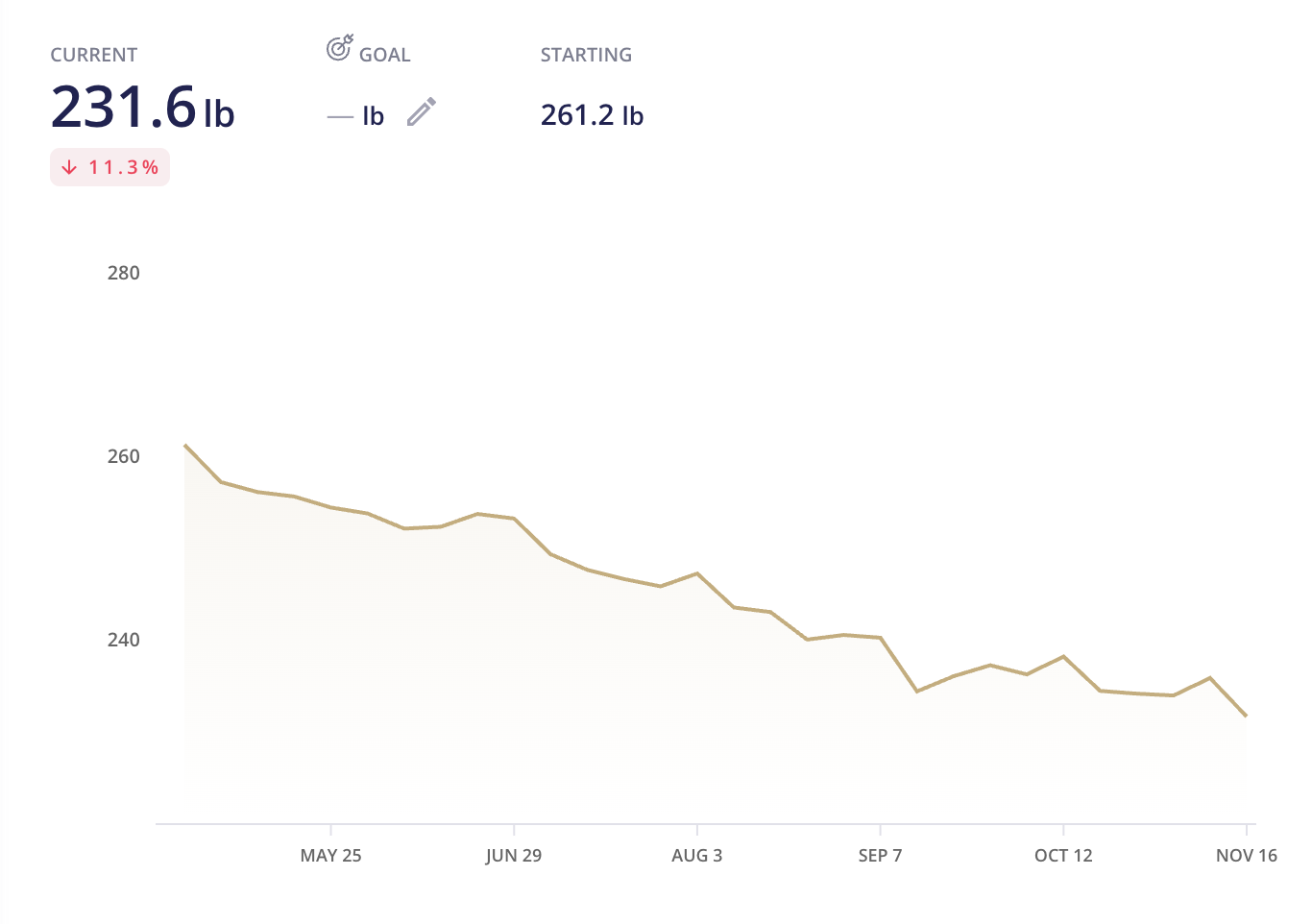
For that stage of her journey, those were the actions we focused on. She didn’t have to overhaul everything at once to make meaningful progress.
As her journey continues, we want to introduce progressive resistance training to support her muscle and strength goals.
Her experience shows that you can begin with what you’re ready and able to do, then build from there. It doesn’t establish that everyone should delay lifting or expect her rate of weight loss.
There’s no requirement to lose a certain amount of body fat before starting strength training. Nutrition, walking, and appropriately scaled resistance exercise can work together from the beginning.
What We Assess Before Building a Plan Without Gym Access
When someone joins BIA without gym access, I want to understand what’s behind that.
Is the nearest gym too far away? Does her schedule make the commute unrealistic? Does she have equipment at home? Or is she nervous because she doesn’t know what she would do once she gets there?
Those situations call for different plans.
We look at her current eating habits, activity, experience, goals, and available time. We also discuss what she’s comfortable starting with and what she might be open to later.
For one woman, the starting point might be nutrition awareness and regular walks. For another, it might include home strength sessions immediately.
The goal is to build something she can repeat and progress.
When Gym Anxiety Is Part of the Problem
Sometimes “I can’t go to the gym” means “I feel intimidated, and I don’t know where to start.”
In those situations, we work on confidence alongside the plan. Home workouts can provide a starting point while someone becomes more familiar with exercises and following a program.
We’ve found that clear direction can change how someone feels about the gym. Knowing which exercises to do, how to perform them, and what comes next can make the experience less intimidating.
If going to a gym is something she wants, we can work toward it. If she prefers training at home, we discuss how to make that effective for her goals.
What “Dialing In Nutrition” Actually Means
When I talk about dialing in nutrition, I mean becoming aware of what you’re consuming and learning how to make it work for you.
That starts with awareness.
What are your portions like? How much protein are you getting? What’s going into your meals beyond the main ingredients? How does your eating change on weekends?
We’re looking for useful information, not reasons to judge your food.
Start With Awareness Before Making More Rules
Someone might tell us she eats healthy, but she hasn’t considered cooking oils, dressings, drinks, or the portions served when she eats out.
Another woman might be trying to eat very little, struggling with hunger, and finding it difficult to stay consistent.
Those women don’t need identical instructions.
We also don’t assume someone’s current intake from her body size. We assess what’s happening now before deciding whether to reduce intake, improve consistency, or spend time establishing adequate fueling.
A larger body doesn’t automatically mean someone is currently overeating. Likewise, increasing calories isn’t itself a fat-loss mechanism.
Build Meals Around Adequate Protein
We regularly see clients arrive eating less protein than they realize. Some report getting only around 40 to 50 grams a day.
We help them establish an appropriate target and practical ways to reach it. Protein supports muscle maintenance, and needs depend on factors including body size, activity, and goals.
That might mean adding Greek yogurt at breakfast, including a clear protein source at lunch, or planning dinner before the evening gets chaotic.
The target matters, but so does knowing how to meet it consistently.
Make Room for Carbs and Pay Attention to Fats
Some women arrive afraid of carbohydrates. Others haven’t noticed how quickly fats from oils, sauces, restaurant meals, and snacks add up.
We help them understand both.
Carbohydrates can support activity and fit into a weight-loss plan. Dietary fat belongs in a balanced diet too; its calorie density makes portion awareness useful.
We often start with meals built from straightforward ingredients because they’re easier to portion and track. That doesn’t mean every meal needs to be homemade or that packaged foods are off-limits.
You need an approach that works when life gets busy, too.
Can You Build Muscle With Home Workouts?
Yes. A gym provides convenient access to equipment and heavier resistance, but your muscles can respond to challenging resistance outside a gym.
Our client Blair didn’t have the time and means to make gym visits work. She did have a home gym and time to train there.
She started with us at roughly 124 pounds and was around 111 pounds by November, with a noticeably different physique.
Her experience is another example of building a plan around someone’s circumstances. Those numbers describe her journey; they aren’t targets for everyone reading this.
For home training, the important question is whether the exercises provide an appropriate challenge and allow progression.
Depending on the equipment and exercise, that might mean:
Increasing the weight or band resistance.
Performing more repetitions with the same resistance.
Progressing to a more challenging exercise variation.
Eventually, limited equipment can make progression less convenient. That’s when we discuss adding equipment, changing the program, or considering a gym if it fits the client’s preferences.
Why Strength Training Still Matters During Weight Loss
Losing weight and building the physique you want are related goals, but they aren’t identical.
If you want more shape through your glutes, shoulders, or legs, building muscle can help. Resistance training also helps preserve muscle during weight loss.
You don’t need to wait until you’re smaller to benefit. General activity guidelines recommend muscle-strengthening activity at least twice weekly, adapted to your ability.
Muscle does use more energy at rest than fat, but the difference is modest. Adding muscle won’t automatically give you hundreds of extra calories to eat every day. After substantial weight loss, overall calorie needs may still be lower because your body is smaller.
I’d emphasize strength training for what it directly offers: muscle, strength, and support for the body composition you want.
What Does an Online Coach Add Beyond Food Tracking?
You can track your food and walk more on your own. Plenty of people do.
But many women come to us already knowing those pieces. They’ve downloaded the app, tried tracking, and attempted to be more consistent.
The difficulty is making it work within their current lifestyle and knowing what to adjust when it doesn’t.
At BIA, we look beyond the workout program or calorie target. We ask:
How are you sleeping?
What are your stress levels?
What are you eating?
Are you getting enough water?
How’s your digestion?
Those answers provide context for progress, recovery, hunger, and consistency.
If the scale stalls, the next step isn’t automatically to eat less or add cardio. We review the trend, how consistently the plan has been followed, and what else is happening before deciding whether a change is needed.
Coaching provides direction, accountability, and someone to work through those decisions with you. It also gives us opportunities to address food fears and rigid rules within our coaching scope.
The goal is for you to understand the process and develop skills you can keep using.
Start With the Access You Have
You don’t need a gym membership before you can start improving your nutrition, walking consistently, or following a structured plan.
Cassandra began with nutrition and steps. Blair trained at home. Their approaches reflected their circumstances and goals.
If you want support doing the same, BIA’s online fitness and nutrition coaching helps you establish a starting point, assess your progress, and build from there.
Start with what you have. Give it clear direction. Then keep building.