
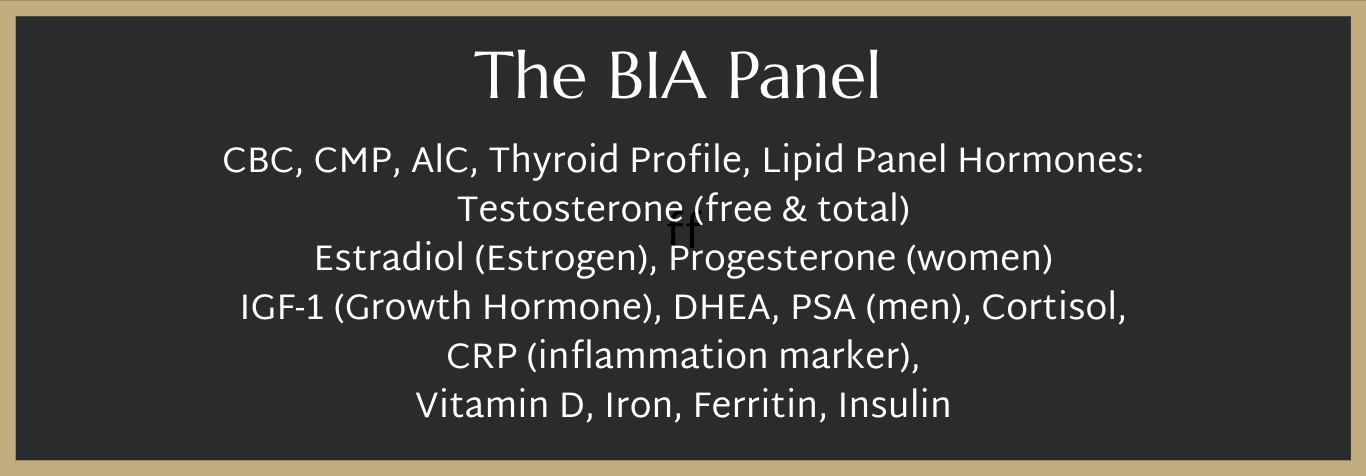
What we test at BIA
Core Health Markers
What it measures, why it matters and what they mean:
CBC (Complete Blood Count)
What it measures: Red and white blood cells, hemoglobin, hematocrit, and platelets.
Why it matters: Reflects your body’s ability to carry oxygen, fight infection, and recover from stress or illness.
If out of range:
Low red blood cells / hemoglobin: Fatigue, weakness, pale skin (possible anemia).
High white blood cells: May indicate infection, inflammation, or stress.
Low platelets: Easy bruising or bleeding.
CMP (Comprehensive Metabolic Panel)
What it measures: Liver enzymes, kidney function, electrolytes, and blood sugar.
Why it matters: Shows how well your organs are functioning and how your body manages hydration and energy.
If out of range:
High liver enzymes: Liver stress (can come from alcohol, medications, or inflammation).
High creatinine/BUN: Kidney strain or dehydration.
Low sodium/potassium: Muscle cramps, weakness, or fatigue.
A1C (Hemoglobin A1C)
What it measures: Average blood sugar levels over 2–3 months.
Why it matters: Indicator of insulin sensitivity and risk for diabetes.
If out of range:
High A1C: Poor blood sugar control; fatigue, weight gain around the midsection, carb cravings.
Low A1C: Can indicate low blood sugar episodes or under-fueling.
Thyroid Profile
What it measures: TSH, Free T4, Free T3 (and sometimes antibodies).
Why it matters: Regulates metabolism, energy, temperature, and mood.
If out of range:
Underactive thyroid (hypo): Fatigue, weight gain, hair loss, constipation, depression.
Overactive thyroid (hyper): Anxiety, weight loss, rapid heart rate, sweating, trouble sleeping.
Lipid Panel
What it measures: Cholesterol (total, LDL, HDL) and triglycerides.
Why it matters: Reflects heart health and how your body processes fats.
If out of range:
High LDL or triglycerides: Increased cardiovascular risk; often tied to poor diet, stress, or hormonal imbalance.
Low HDL: Reduced “protective” cholesterol; may mean you need more healthy fats or movement.
Inflammation & Metabolic Markers
CRP (C-Reactive Protein)
What it measures: Level of inflammation in the body.
Why it matters: Chronic inflammation is linked to fatigue, joint pain, and metabolic dysfunction.
If out of range:
High CRP: Chronic stress, poor recovery, infections, autoimmune conditions, or poor diet quality.
Insulin
What it measures: Hormone that regulates blood sugar and fat storage.
Why it matters: Shows how your body responds to carbs and calories.
If out of range:
High insulin: Insulin resistance → energy crashes, cravings, belly fat, fatigue.
Low insulin: Under-eating, low carb for too long, or adrenal stress.
Cortisol
What it measures: Primary stress hormone.
Why it matters: Influences energy, sleep, recovery, and metabolism.
If out of range:
High cortisol: Anxiety, sleep issues, stubborn belly fat, burnout.
Low cortisol: Exhaustion, poor focus, low motivation, salt cravings.
Hormone Panel
Testosterone (Free & Total)
What it measures: Anabolic hormone for strength, muscle, mood, and libido.
Why it matters: Affects body composition, motivation, recovery, and sexual health.
If out of range:
Low: Fatigue, loss of strength, low libido, mood swings, poor recovery.
High (esp. in women): Acne, hair growth, cycle irregularities.
Estradiol (Estrogen)
What it measures: Main form of estrogen.
Why it matters: Regulates menstrual cycle, fat distribution, bone health, and mood.
If out of range:
Low: Hot flashes, dry skin, low libido, irregular cycles.
High: Bloating, breast tenderness, mood swings, heavy periods, weight gain around hips/thighs.
Progesterone (Women)
What it measures: Hormone that balances estrogen and supports fertility and calm.
Why it matters: Influences mood, sleep, and metabolism.
If out of range:
Low: PMS, anxiety, poor sleep, spotting before period, difficulty losing fat.
High: Fatigue, bloating, or breast tenderness (often short-term in luteal phase).
DHEA (Dehydroepiandrosterone)
What it measures: Precursor hormone for testosterone and estrogen.
Why it matters: Supports resilience, mood, energy, and immune function.
If out of range:
Low: Fatigue, low motivation, low libido, poor recovery.
High: Acne, hair growth, or cycle issues (especially in women).
IGF-1 (Insulin-Like Growth Factor 1)
What it measures: Reflects growth hormone activity.
Why it matters: Regulates cell repair, muscle building, and aging.
If out of range:
Low: Slow recovery, loss of muscle, low energy, premature aging signs.
High: May indicate overgrowth or insulin resistance.
PSA (Prostate-Specific Antigen — men only)
What it measures: Protein made by the prostate.
Why it matters: Elevated levels can indicate prostate inflammation or risk for prostate issues.
If out of range:
High: Possible prostate enlargement, inflammation, or in rare cases, cancer risk.
Nutrient & Iron Markers
Vitamin D
What it measures: Levels of the “sunshine vitamin.”
Why it matters: Supports immune health, hormone balance, bone strength, and mood.
If out of range:
Low: Fatigue, low mood, poor recovery, frequent illness, bone/joint aches.
Iron & Ferritin
What they measure: Iron is used to make red blood cells; ferritin reflects stored iron.
Why they matter: Critical for oxygen transport, energy, and performance.
If out of range:
Low: Fatigue, dizziness, brain fog, hair loss.
High: Can cause oxidative stress and fatigue.